
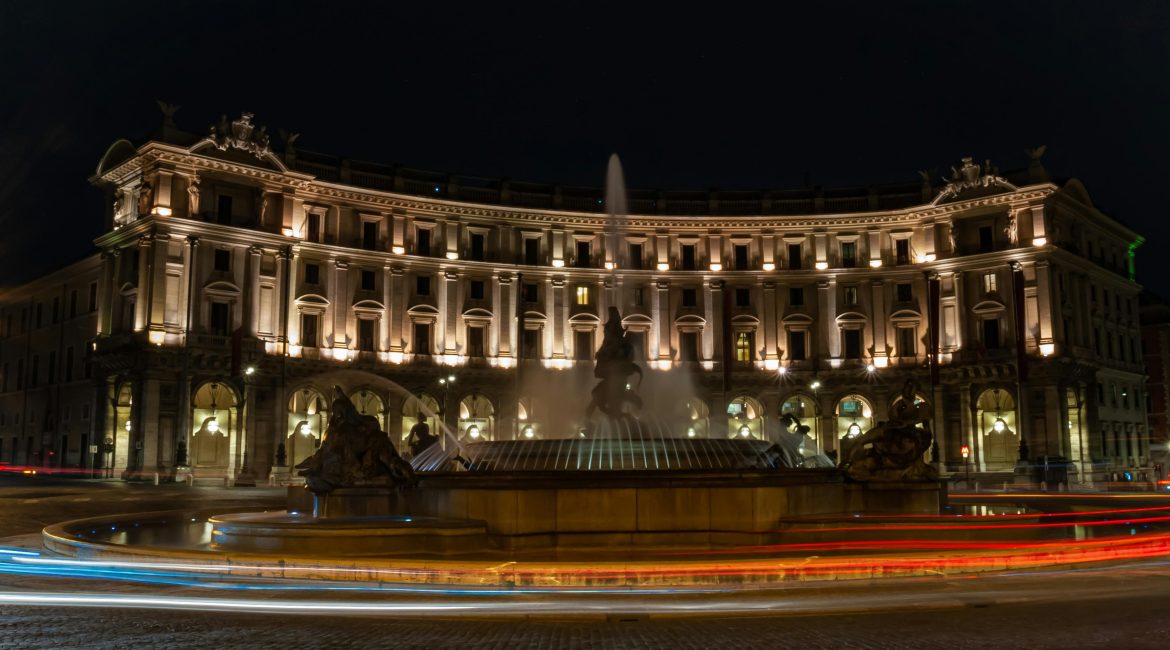
Piazza della Repubblica (or Piazza Esedra)

Piazza della Repubblica, located in the heart of Rome, is a place steeped in history and charm. Originally known as Piazza Esedra, it owes its current name to the large semicircular exedra that dominated the square in the past. This square has witnessed centuries of transformations and played a significant role in the city’s history.
In ancient Rome, this area was occupied by the Baths of Diocletian, one of the largest and most sumptuous baths in the Roman Empire. Built in the 4th century A.D. by Emperor Diocletian, the baths could accommodate up to 3,000 bathers at a time and included a wide range of recreational and spa facilities.
With the decline of the Roman Empire, the Baths of Diocletian were abandoned and converted into other facilities, including a Christian church, the Basilica of St Mary of the Angels and Martyrs, designed by Michelangelo in the 16th century.
Over the following centuries, the area underwent further transformations until, in the 19th century, plans were made to create a new square to celebrate the Unification of Italy. Thus was born Piazza Esedra, a large and majestic square dominated by the Fountain of the Naiads, a work by sculptor Mario Rutelli, representing the nymphs of the rivers Tiber, Aniene, Nile and Delphi.
Today, Piazza della Repubblica is one of Rome’s main squares, surrounded by historic and modern buildings, luxury shops and trendy cafés. It is a place frequented by tourists and Romans alike, who gather here to admire the architecture, take a stroll or enjoy a moment of relaxation.
Through its transformations and multiple functions over the centuries, Piazza della Repubblica continues to be an important crossroads of history, culture and urban life in the beautiful city of Rome.
